


Spoiler Warning: We are spoiling Loki (Season 2) and the entire MCU continuity. If you aren’t caught up, or don’t want Avengers: Doomsday to be spoiled (even though I have absolutely no idea about what will happen in that movie), stop reading now or accept the risks.
“I want my friends back. I don’t want to be alone.” Loki confesses this to Sylvie in what might be one of the most vulnerable moments of his life. It took until the penultimate episode of season two for him to say those words out loud, but it is clearly why he does everything he does (that and trying to protect all of time, which happens to be the only way to save his friends). Season one of Loki was about him becoming the man (God) that he was always meant to be, and season two is about friendship and him giving up his life for the people he truly cares about.
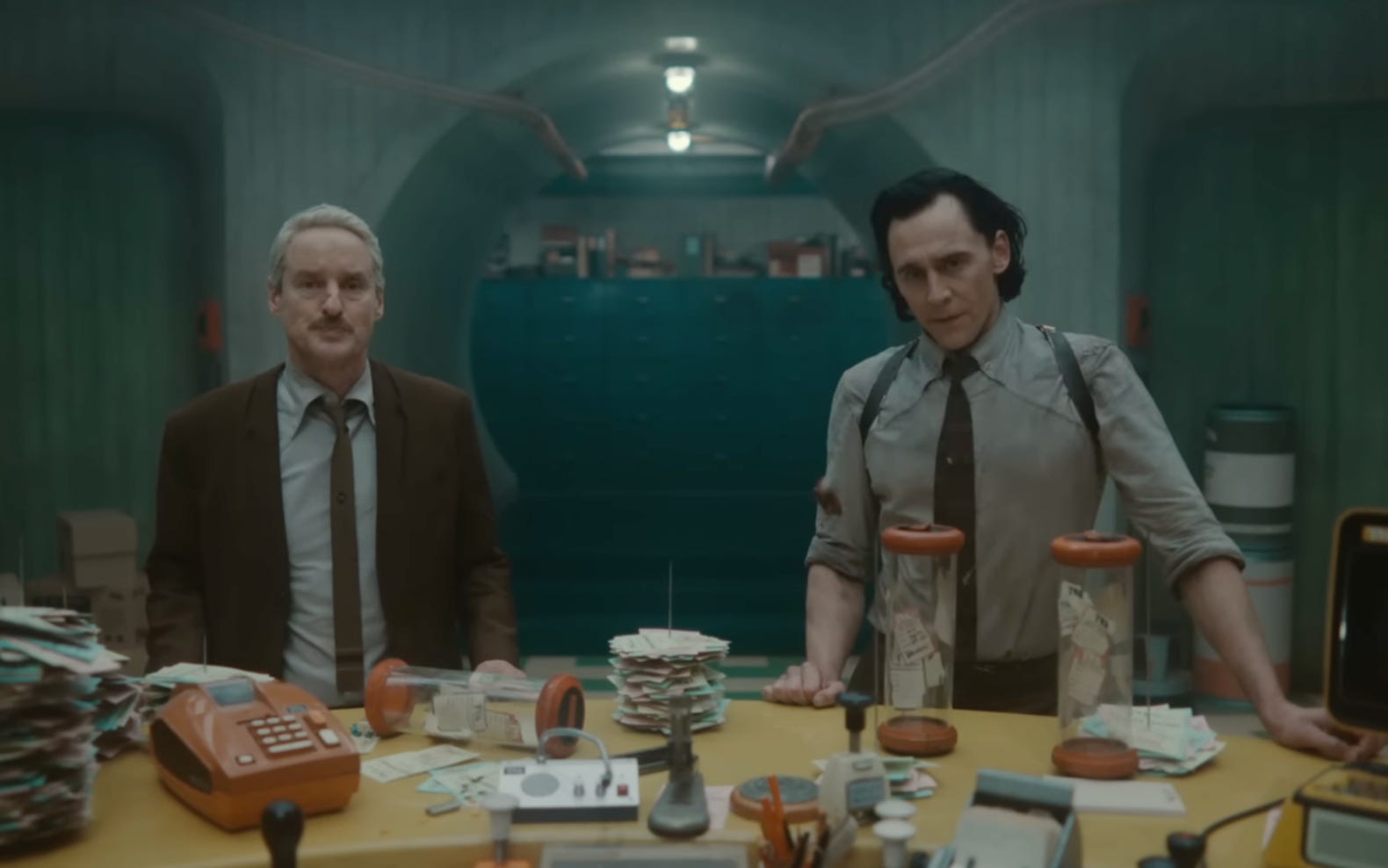
At the end of season one, Loki and Sylvie meet He Who Remains (whom Sylvie kills, establishing the problems Loki—the character and the show—spends all of season two trying to solve). Season two: Back in the TVA, Loki is experiencing “time-slipping” (violent, involuntary temporal displacement). He and Mobius go see Ouroboros (OB—played by the idiosyncratic Ke Huy Quan) to figure things out and they all learn the temporal loom is on the verge of a meltdown (which would erase the universe). Loki and Mobius capture Hunter X-5 (Brad) and locate Sylvie, but not before General Dox prunes countless branched timelines, killing trillions. They track Renslayer and Miss Minutes to 1893 where they meet Victor Timely (a variant of He Who Remains) who is crucial to fixing the temporal loom. In the TVA, they prepare for Victor to repair the Throughput Multiplier (another science device used to expand the temporal loom and allow all the timelines to coexist), but when he steps outside he disintegrates. Loki is sent through time to meet with each of his friends and convince them that they need to help him save… time. He realizes his time-slipping is tied to his emotions, allowing him to master time travel. Back in the TVA (again), Loki literally spends centuries (using his newfound mastery of time travel) learning about physics, mechanics, and temporal engineering to successfully launch the multiplier and expand the loom (science, science, science). He eventually has to destroy the loom, take hold of all the branched timelines, exile himself, and use his magic to finally sit on the throne that he always felt was his. At the End of Time, he sits there holding together all of the dying timelines into the shape of Yggdrasil—the Norse World Tree—where he is now the God of Stories, protecting free will for the entire multiverse.
Loki is required viewing for anyone who is going to see Doomsday (and anybody who wants to just watch a good show). Time travel, timelines, variants, and incursions are all explained in Loki, establishing some essential ground rules for Doomsday. All of the scientific sciency science serves as the temporal chessboard for Doctor Doom. We assume he will be seeking some sort of multiversal dominion, making Loki and his throne at the End of Time a primary target (we are not sure when in the timeline Loki goes back to get Steve Rogers and Peggy Carter, but we do know that he goes to their timeline from the end of Endgame). Does Doom get to Loki and force him to act? Does Loki make preemptive moves? We have no idea. But we do know that the events of Loki play a (probably big, but at least somewhat significant) role in Doomsday. The crazy thing about all of this is that it wasn’t even supposed to be Doctor Doom as the big bad. It was supposed to be Kang the Conqueror (or a multitude of his variants), but circumstances forced Marvel to pivot, and Loki is retroactively crucial to whatever happens next.
What makes Loki one of my favorite Marvel properties isn’t how it connects to Doomsday, but the paradoxical nature of the show, where there is a lot of action, but also a lot of quiet, poignant moments. There is a lot of temporal jargon, especially in season two (and it can definitely go over your head—but don’t worry about it). You just need to know that Loki sacrificed everything he finally learned to love and care about for trillions of people who will never even know he is the reason they still exist. The only people that will know are the very ones who he did everything for. “Most purpose is more burden than glory. And trust me, you never want to be the guy who avoids it because you can’t live with the burden.” Mobius says this to Loki, taking his defining philosophy and flipping it. In the end both Loki and Mobius were right, he was burdened with glorious purpose, but his purpose was definitely more burden than glory.
Disclaimer: All images and characters are the property of their respective copyright holders and are used here under Fair Use for analysis and commentary.