


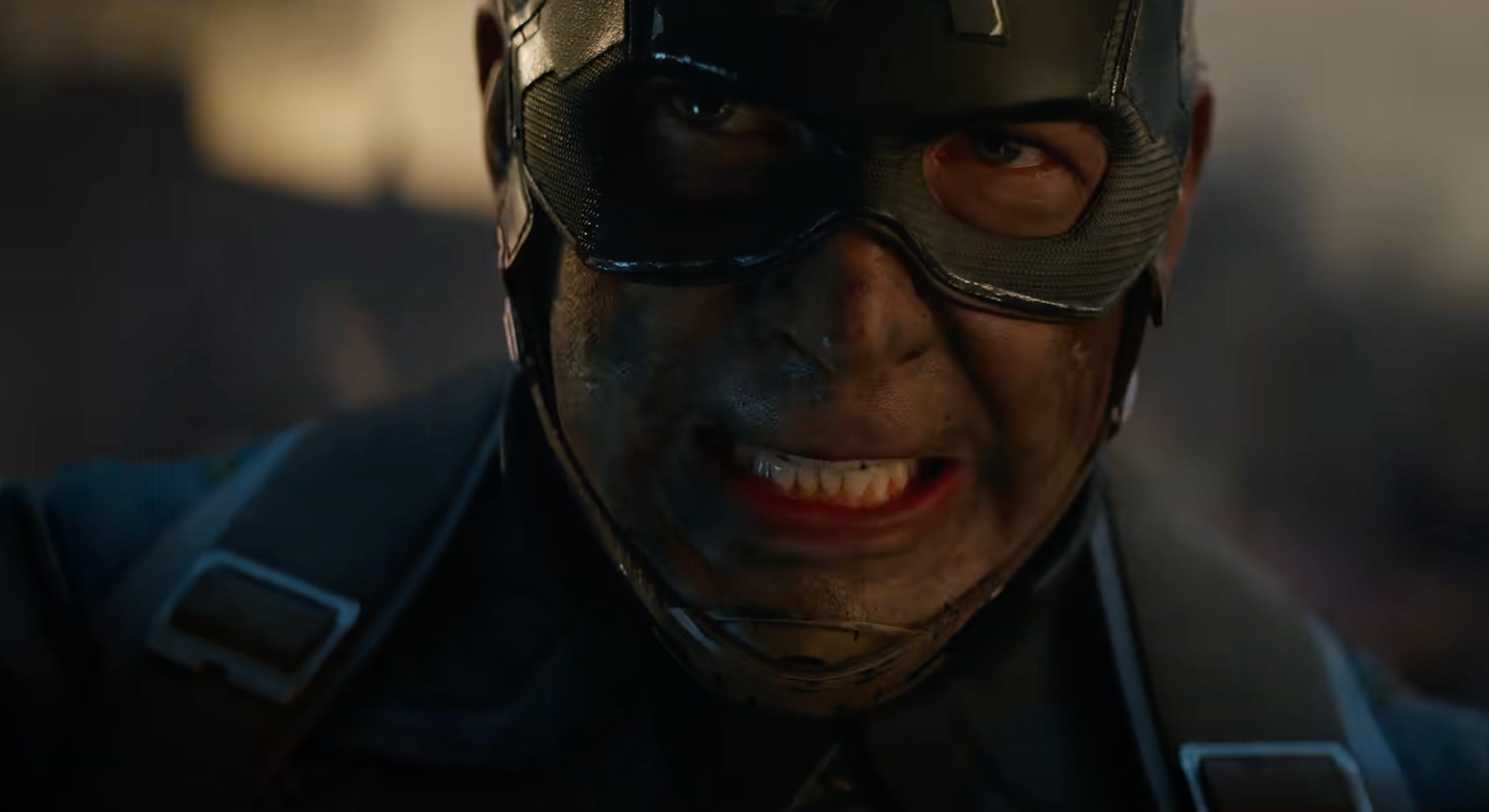
Spoiler Warning: We are spoiling Avengers: Endgame and the entire MCU continuity. If you aren’t caught up, or don’t want Avengers: Doomsday to be spoiled (even though I have absolutely no idea about what will happen in that movie), stop reading now or accept the risks.
We had to wait twelve months from Infinity War to Endgame. Ant-Man and The Wasp and Captain Marvel came out in between. But even though both movies are connected to Infinity War (through their post-credits scenes—Scott being stuck in the Quantum Realm while Hope, Hank, and Janet turned to dust, and Carol Danvers answering Nick Fury’s distress signal), we were still wondering what the Snap meant for the MCU. The Avengers films were two parts of the same whole (they were even originally titled Part 1 and Part 2), and we didn’t even know that Endgame was the name of the second movie until Marvel released the first trailer in December of 2018—five months before it came out, and seven months after the Snap. Little did we know when Doctor Strange told Tony, “We’re in the endgame now,” that a seemingly passing line would take on such immense meaning.
While Infinity War is a Thanos movie, Endgame is definitely an Avengers movie (where they kill Thanos, and he is still the villain after he is already dead—time shenanigans). Quick recap of how we got to where we were at the beginning of this movie: Thanos collected all of the Infinity Stones (Mind, Power, Time, Soul, Reality, and Space—in no particular order), killing a lot of people along the way, including Heimdall, Loki, Gamora, and Vision. Then he snapped away half of all life in the universe, including Spider-Man, Black Panther, Doctor Strange, Peter Quill, Groot, Drax, Mantis, Bucky Barnes, Wanda Maximoff, Sam Wilson, Nick Fury, and Maria Hill, leaving behind all of the original Avengers and some crucial allies. While Thanos was ruthless in achieving his goal of bringing balance to the universe, he wasn’t doing it for selfish reasons, but because he thought that was what it needed. This is why Infinity War and Endgame are on the Doomsday watchlist: where Thanos wanted universal balance, Doctor Doom wants universal order (at least that is what he historically wants in the comics).
Here’s a rundown of Endgame: The surviving Avengers (with the help of Captain Marvel) track down Thanos, find he already destroyed the Stones, making the Snap irreversible, prompting an enraged Thor to kill him (he went for the head). Five years go by before Scott Lang escapes the Quantum Realm and suggests time travel. They go to Tony for help and he denies them. He then solves time travel, decides to help, and enables them to go back in time and get the Stones (2012, 2013, and 2014—then to 1970 when their plan to get the Space Stone fails). The time heist works across timelines, but Natasha Romanoff sacrifices her life for the Soul Stone, and 2014 Thanos discovers the plot. They get back home and Bruce Banner uses Tony’s Nano Gauntlet to resurrect the universe’s snapped population, but Thanos from 2014 transports his warship through the quantum tunnel and obliterates the Avengers Compound. The ultimate battle erupts, ending when Tony slyly transfers the Stones to his own suit and snaps Thanos’s army away at the cost of his own life. There is a funeral for Tony, Thor names Valkyrie King of New Asgard, and Steve Rogers returns the Stones across time and chooses to live life with Peggy Carter in the past, ultimately passing his shield to Sam Wilson.
Endgame was the culmination of 22 films over more than a decade. There were numerous callbacks and moments for the fans who were there from the beginning. Steve Rogers wields Mjölnir (a callback to Age of Ultron, proving that Steve is worthy). Captain America finally says the words that fans were waiting four movies for: “Avengers… assemble.” When all of the heroes return from the Snap, the first thing we hear is Sam Wilson telling Cap, “On your left” (calling back to Captain America: The Winter Soldier). And the last words Tony Stark ever says are, “I am Iron Man,” bringing us all the way back to the beginning of the MCU when he introduced himself to the world with those exact same words at the end of Iron Man. Even the credits were a nod to the fans. While there were no mid- or post-credits scenes, each of the original Avengers (Jeremy Renner, Scarlett Johansson, Chris Hemsworth, Mark Ruffalo, Chris Evans, and Robert Downey Jr.) got their own tribute card before all the credits rolled, culminating in the sound of Tony Stark hammering out his very first Mark I armor inside the cave from the original 2008 Iron Man movie.
One negative consequence of the success of Endgame is what it did to the MCU for all of the films that followed. Fans and critics alike expected most movies that Marvel released to be on the same level as Endgame—not every movie has a 22-film, 11-year buildup. It was an unfair expectation to have for any movie… until Doomsday. While it doesn’t have the same runway as Endgame, the hype and expectations are definitely there—deservedly so. Infinity War grouped superheroes in an almost flawless way (the back-and-forth between Thor and Rocket brings some of the funniest and saddest moments of the entire series). Endgame brought the focus back to the original six Avengers and gave them a fitting sendoff. Doomsday will take the lessons learned from both of these movies to orchestrate a film that is a worthy successor.
Disclaimer: All images and characters are the property of their respective copyright holders and are used here under Fair Use for analysis and commentary.