


Spoiler Warning: We are spoiling Avengers: Infinity War and the entire MCU continuity. If you aren’t caught up, or don’t want Avengers: Doomsday to be spoiled (even though I have absolutely no idea about what will happen in that movie), stop reading now or accept the risks.
Some of the most devious and iconic villains in cinematic history were irredeemable, driven entirely by selfish ambition, and lacking any moral duality. Hans Gruber wanted tons of money no matter the cost in human life (in the form of bearer bonds hidden in the vault at Nakatomi Plaza). Keyser Söze was motivated by being the most ruthless criminal in the world (he created an urban legend around his identity and eliminated anybody that could identify him, even his own family… allegedly). The Joker just wanted to cause as much chaos as possible (killing, robbing, kidnapping—pretty much whatever would cause widespread panic). Lord Voldemort was obsessed with immortality and the total subjugation of everybody (wizards and Muggles alike). I didn’t include Darth Vader because there was a bit of duality to him—especially at the end when he threw the Emperor down the reactor shaft to save his son he had already tried to kill a few times.
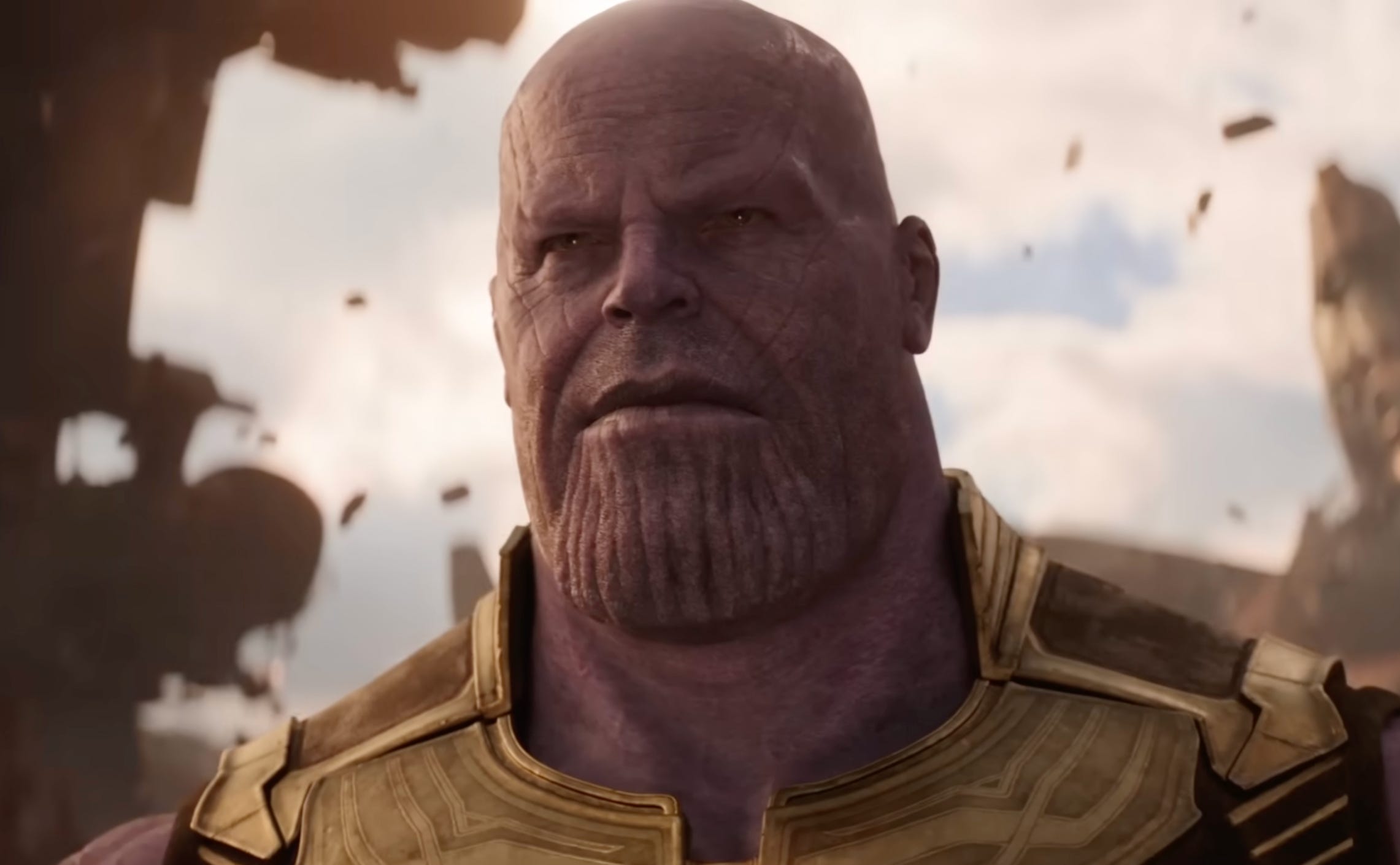
Thanos is also an iconic villain. He is probably even irredeemable (he did make half of all life in the universe cease to exist). But he is not driven by selfish ambition, and he is definitely not lacking any moral duality. He truly believed that what he was doing was in the best interest of the entire universe. He explains this to his daughter, “This universe is finite, its resources, finite. If life is left unchecked, life will cease to exist. It needs correcting.” Not only did he think the universe needed correcting, he felt he was the only one willing to do what was necessary (he was right; nobody else saw it as a necessity to kill trillions). Here is where the duality comes in—he didn’t mind killing to achieve his goal of a more balanced universe. His hype man, Ebony Maw, makes that clear when he introduces Thanos to his victims, “You may think this is suffering. No... it is salvation. The universal scales tip toward balance because of your sacrifice. Smile... for even in death, you have become children of Thanos.” While I may not agree with the solution, the problem is real.
It’s not surprising that Marvel made Thanos the villain in Infinity War, but it is a bit surprising that they made him the protagonist of an Avengers film. His actions drive the story, his decisions shape the plot, and he is the emotional heart of the narrative.
Here’s a quick rundown of Thanos’ movie: Thanos ambushes an Asgardian refugee ship, beats up Hulk, kills Loki and Heimdall, claims the Space Stone, and leaves Thor stranded in space. Bruce Banner, Doctor Strange, Iron Man, and Spider-Man fight Ebony Maw (I would say to a draw), then Iron Man and Spider-Man board the ship that he escapes on to rescue Doctor Strange (who he kidnapped—so not a draw) and the Time Stone from him. The Guardians of the Galaxy rescue Thor (who was floating out in space for who knows how long), some of them go to Knowhere where Thanos gets the Reality Stone and kidnaps Gamora, while Thor, Rocket, and Groot head to Nidavellir where Thor literally takes the full power of a star so he could get Stormbreaker (an axe made for a god, that replaces his hammer that was also made for a god). Steve Rogers and friends save Wanda and Vision, then take Vision to Wakanda so Shuri could try to get the Mind Stone out of his head (very carefully). Thanos tortures Nebula to force Gamora to tell him where the Soul Stone is (she is the only one that knows it is on Vormir), she tells him, they go there, and he tearfully kills her to get the stone. Iron Man, Spider-Man, Doctor Strange, and the Guardians have a plan for Thanos on Titan (it doesn’t work); Thanos is about to kill Tony when Doctor Strange gives him the Time Stone to save Tony’s life. In Wakanda, all of the heroes on Earth fight off Thanos’ henchmen (and alien army) until Thanos arrives right as Wanda kills Vision, but Thanos uses the Time Stone to rewind time, take the Mind Stone from Vision, combine all six of the Infinity Stones, and snap half of the universe away. Those snapped away turn into dust, leaving the remaining Avengers defeated.
The Snap was truly groundbreaking. I remember walking out of the theater (that was dead silent, by the way) absolutely shocked. Imagine sitting through more than two and a half hours of a superhero movie, then at the very end, more than half the heroes are snapped away and the remaining heroes are beaten down and distraught (if you look at the numbers, way more heroes were snapped away than weren’t—and all of the original Avengers just so happened not to get snapped away). It didn’t matter that we knew that at least some of the snapped heroes were going to be back (Spider-Man had another movie coming out), it was still shocking.
You want to know what else is shocking? I’m not going to get into why Infinity War is on the watchlist, independent of Endgame (they were originally sold to us as Infinity War Part 1 and Infinity War Part 2). So consider this Part 1 of a much longer, two-part essay. This doesn’t mean that Infinity War is not a great movie on its own, but it’s just one half of a great story.
We’re in the endgame now.
Disclaimer: All images and characters are the property of their respective copyright holders and are used here under Fair Use for analysis and commentary.